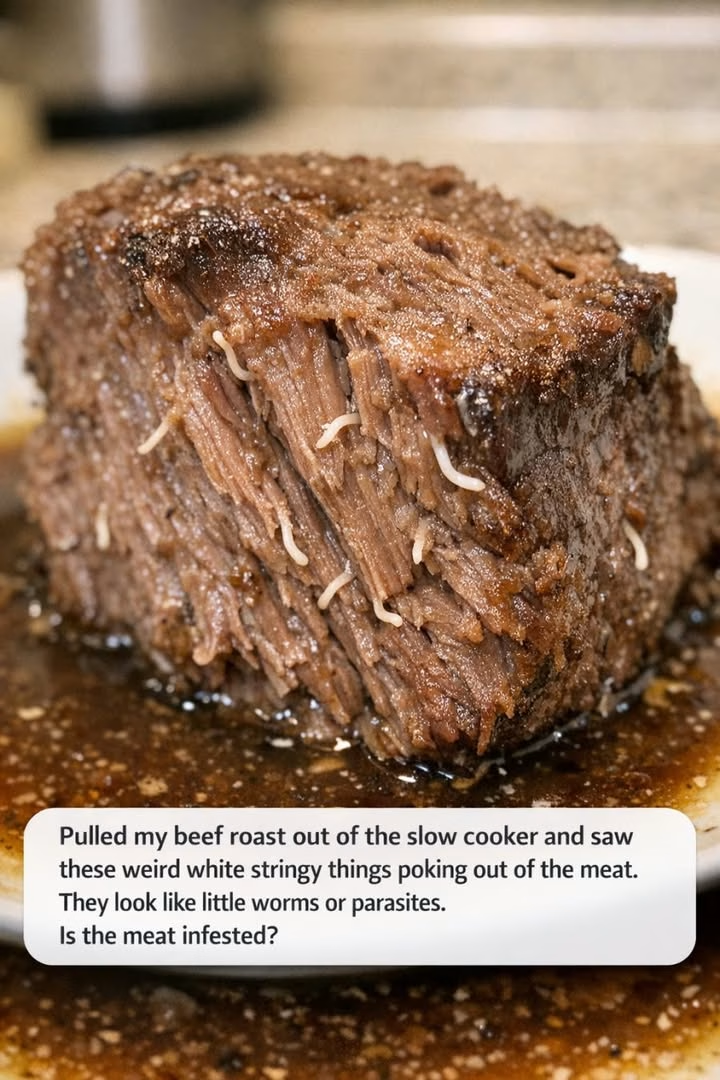
“Worms” in Your Pot Roast? Why Those White Strings are Actually a Good Sign
You’ve been smelling that savory aroma all day. You lift the lid of the slow cooker, ready for a tender feast, only to see thin, white, stringy things poking out of the beef. Your stomach drops. Is my dinner infested with parasites?
Before you toss the entire roast into the trash, take a deep breath. What you’re looking at isn’t a science experiment gone wrong—it’s actually the secret to why slow-cooked meat tastes so good.
1. The “Worm” Myth vs. Reality
It’s a common panic, but in the world of modern food safety, finding actual parasites in a store-bought beef roast is incredibly rare. What you are seeing are connective tissues and nerve sheaths.
Beef is held together by a protein called collagen. In tough cuts like chuck or brisket, this collagen is thick and abundant. When subjected to the low, slow heat of a crockpot, these tissues shrink and tighten, often poking out of the muscle meat in a way that looks suspiciously like a small white string.
2. Anatomy of a Roast: Muscle vs. Tissue
To understand your dinner, you have to understand the cow’s anatomy. A roast isn’t just pure muscle; it’s a complex map of:
- Muscle Fibers: The “red” part of the meat.
- Connective Tissue: The “glue” (collagen) that holds muscle to bone.
- Intramuscular Fat: Often called marbling.
As the meat cooks, muscle fibers contract and squeeze out moisture. This contraction can push the tougher, white connective tissues outward, making them suddenly visible against the dark, cooked meat.
3. Why Slow Cooking Makes it More Noticeable
The slow cooker is designed to turn tough collagen into melty gelatin. This process is why a pot roast pulls apart with a fork. During this breakdown:
- Collagen melts: It turns into a slippery, semi-translucent or white substance.
- Nerve sheaths remain: Tiny, tube-like structures that protected the cow’s nerves are heat-resistant and can look like small white threads once the surrounding fat has melted away.
How to Tell the Difference
| Feature | Connective Tissue (Safe) | Parasites (Unsafe/Rare) |
|---|---|---|
| Texture | Soft, gelatinous, or rubbery; breaks with a fork. | Firm, distinct, and often uniform in shape. |
| Integration | Clearly attached to or emerging from the meat fibers. | Usually looks like a “foreign object” tucked into the meat. |
| Cooking | Most visible after cooking as fibers shrink. | Would likely be destroyed or shriveled by high heat. |
When Should You Actually Worry?
If the “strings” are just part of the meat’s structure, you’re fine. However, you should discard the meat if you notice these actual red flags:
- The Smell Test: If it smells sour, ammonia-like, or “off,” toss it.
- The Touch Test: If the meat feels slimy or tacky to the touch.
- The Sight Test: Greenish tints or fuzzy mold patches are immediate dealbreakers.
Pro-Tip: Minimize the “Ick” Factor
If the sight of those white fibers ruins your appetite, try these prep steps next time:
- Trim Thoroughly: Remove heavy “silver skin” and thick white bands of gristle before cooking.
- The Sear: Brown the meat in a pan first. This creates a dark crust that hides the internal structures.
- Shred It: Instead of slicing, shred the roast with two forks. This breaks up the connective tissue and blends it into the gravy.
The Bottom Line: Those white strings are just collagen doing its job. They are the reason your roast is juicy rather than dry. If your meat reached 145°C (63°C) and sat for a few minutes, any potential bacteria or parasites are long gone. Grab a fork and enjoy!